Not who is richest or best known, but who pushed the boundary of human capability outward—how far, and how durably.
ABOUT · STARLIGHT
A measure for civilization, a catalogue of its stars.
Why this project exists, who is building it, and how you can take part.
A LIVING PUBLIC PROJECT
Starlight currently publishes itemized assessments for 210 people and catalogues unresolved civilizational problems as Dark Stars. Scores, sources, and missing evidence are shown at their actual stage of completion rather than presented as final truth.
We publish the method, the evidence already in hand, and the paths we later rejected. Credibility does not come from never being wrong. It comes from making every correction traceable and remaining open to a better method. View current data and review progress (Chinese) →
WHY
The world has no shortage of rankings. It lacks a measure.
Starlight’s mission is to help civilization reach 2.0. This is a direction: help more people see the contributions that truly move civilization forward and the problems most worth solving next. The Compass looks ahead; the Starlight Rankings look back. Civilization-wide scoring remains a separate research project, and no civilization grade is currently published. Read about that research →
Humanity ranks wealth, attention, titles and trends with enthusiasm. It still lacks a shared scale for three more consequential questions:
Civilization does not move at a constant pace. Some directions race ahead; others have stalled for so long that no one notices. Which are worth a life’s work?
Which unresolved “dark stars” are holding up the next transition, for how long, and what could be moved by resolving them?
Established measures ask how much a person has taken: wealth, attention, title, heat. Starlight asks how far, how durably and in what direction a person has moved things—and what they have left to civilization. It aims to be an instrument for answering those questions: a measure whose reasons can be checked, calibrated and laid open.
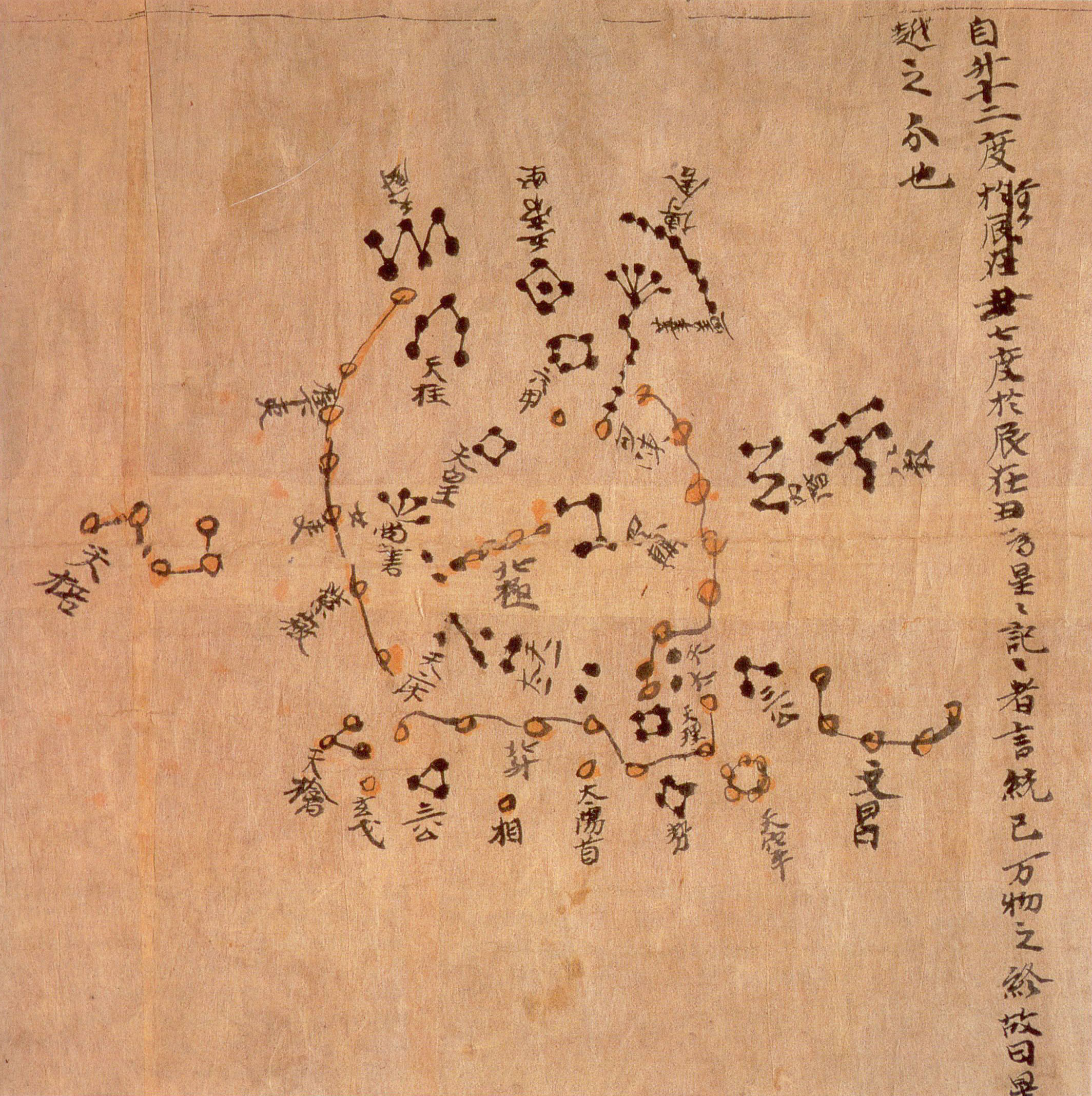
More than a millennium ago, the Dunhuang star chart recorded the positions of over thirteen hundred stars. Starlight extends the metaphor to another kind of star: people, acts and works that have truly moved civilization forward.
Dunhuang Star Chart · Tang dynasty · British Library Or.8210/S.3326 · International Dunhuang Project / CC0 1.0A LIVING INSTRUMENT
Not an annual report, but an instrument that stays awake.
An annual report starts aging as soon as it is printed. Starlight instead keeps calibrating through three loops:
As papers, patents, clinical evidence and engineering deployment enter the record, the coordinates of dark stars can approach the real frontier more closely and the Compass can point more accurately.
Each person record is recalculated as its evidence improves. When the evidence changes, the score changes with it. A current score is never a final epitaph.
Every assessment, challenge and adopted improvement calibrates the measure. Authority is not declared; it is earned through use.
Starlight has no final edition. What is visible at any moment is the version that can best withstand checking at that moment.
SYSTEM
Four parts, one instrument.
The Compass, Starlight Rankings, Assessor and Starlight Award share one value base. The Compass maps unresolved problems. The Rankings assess realized contributions. The Assessor invites nominations and corrections. The Award remains a prospective form of honor.
A catalogue of dark stars: coordinates where civilization remains dark and effort may matter most. When related results acquire reviewable evidence, contributors may enter person-level assessment; a person’s score does not inherit a dark star’s potential.
Open Compass →210 current person records assess each complete result first, then divide credit among the people, teams, predecessors, and institutions that made it possible. Each item shows its sources, reasoning, remaining uncertainty, and review notes.
Open Starlight Rankings →Assess yourself or nominate someone else. It is an invitation to use and calibrate a measure of contribution rather than wealth.
Learn the contribution process (Chinese) →Only collaboration and founding interest are currently accepted. Donations, applications and financial transactions are not open; naming, judging and attribution proposals are not commitments.
See the current status (Chinese) →STANCE
Committed, without pretending to be neutral.
No measure is free of value premises. Pretending otherwise is the deeper dishonesty. Starlight makes its premises explicit, puts important judgments under adversarial challenge, and displays its wrong turns.
Starlight values contributions that expand human possibility. It also asks whether that new capability truly reaches people and whether it creates unacceptable risk. Those are choices that require argument, so we publish them and accept challenges.
Key conclusions—a scale mark, a score or a dark star’s tier—are meant to pass through the same process: one side constructs, several sides try to falsify, and an independent side adjudicates. The public alpha has not completed this everywhere; completed work shows its record, and unfinished work remains draft.
Which scales were used, why they were later rejected and what replaced them are retained for inspection. The measure’s credibility rests on each correction being traceable.
About explains why the project exists. Method explains current person scoring and Dark Star potential. The Library keeps full documents, source notes, and version history.
PEOPLE · PARTICIPATION
Who is building Starlight, and how to take part.
Starlight was initiated by Wu Chao and remains an early open project. Its standards, evidence, and revision history are published so that participants can find errors, add evidence, and propose better ways to assess contribution instead of relying on the founder’s authority.
Meet the initiator and understand why review mechanisms matter more than personal trust.
Submit a person or outcome, correct a record, contribute sources, or choose an unresolved problem worth your time.
Send a correction, evidence, research proposal, product collaboration, or founding interest through the public contact details.
Explore the instrument.
Explore where civilization stands and which problems most urgently need work.
Inspect realized contributions, attribution, sources and outstanding evidence, item by item.
Understand how contribution scores are formed, why earlier methods were revised, and which questions remain open.
At the concept stage, accepting expressions of interest in collaboration or founding only. Donations and applications are not open. Naming, review and annual reporting arrangements remain undecided and are not commitments.
Public full texts and editorial summaries on scoring, evidence, compilation and governance. Internal working drafts do not generate public pages.
Contact details are available for nominations, corrections, evidence, collaboration and founding interest. Please arrange an appointment before meeting in person.